


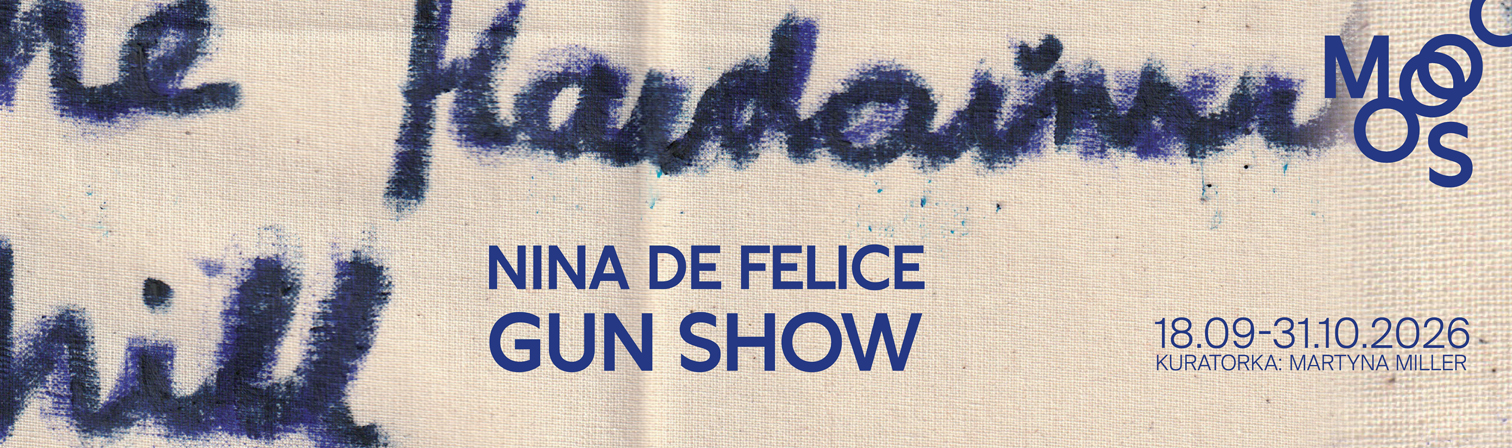
Nina De Felice - GUN SHOW
Otwarcie: 18.09.2026, 18:00
Kuratorka: Martyna Miller
Wystawa czynna do 31.10.2026
GUN SHOW to rozwijana od 2018 roku seria prac Niny De Felice, która przygląda się powszechnej, obsesyjnej kulturze broni przenikającej codzienne życie w Stanach Zjednoczonych. Już sam tytuł uruchamia podwójne znaczenie: gun show oznacza zarówno targi broni – wydarzenie, podczas którego sprzedawcy spotykają się z potencjalnymi nabywcami – jak i potoczne określenie popisu muskulatury. W tym językowym przesunięciu ujawnia się mechanizm charakterystyczny dla kultury broni: broń nie jest wyłącznie narzędziem przemocy, lecz także znakiem, gestem, symbolem siły i elementem codziennego języka. Amerykanie, świadomie lub nie, odnoszą się do niej poprzez słowa, obrazy i język ciała.
Nina De Felice, urodzona i wychowana w Stanach Zjednoczonych, a dziś mieszkająca w Berlinie, podejmuje ten temat z perspektywy osobistej. Jej doświadczenie jest naznaczone pytaniem o bezpieczeństwo i troską o dziecko. Przemoc wpisana w codzienność amerykańskiego życia stała się jednym z powodów emigracji artystki i poszukiwania miejsca, w którym mogłaby bezpiecznie założyć rodzinę. GUN SHOW nie jest jednak prostą opowieścią o opuszczeniu Ameryki. To próba konfrontacji z dziedzictwem, którego nie sposób pozostawić za sobą – z kulturą, obrazami i mitologiami, które kształtowały artystkę i nadal współtworzą jej pamięć.
Malarstwo De Felice powstaje na styku kulturowych klisz, amerykańskich ikon i obrazów zaczerpniętych z kina – wizualnego języka, który przez dekady współtworzył globalną wyobraźnię i romantyzował przemoc. Artystka bada, w jaki sposób fascynacja bronią jest produkowana, powtarzana i eksportowana, a także jak obrazy przemocy przemieszczają się pomiędzy kulturą popularną, prywatnym doświadczeniem i społecznym imaginarium. Jako obywatelka Stanów Zjednoczonych mierzy się z pytaniem, w jaki sposób broń stała się częścią amerykańskiego doświadczenia i jak można negocjować własną relację z tym dziedzictwem poprzez jego reprezentacje.
Punktem wyjścia dla obrazów są rodzinne fotografie, a także porzucone fotografie nieznajomych, które artystka zbierała przez lata. Łączą one przeszłość z przyszłością, a wymiar społeczny z intymną historią artystki – historią córki, wnuczki i matki. Fotografie zostają poddane malarskiej transformacji, która nie tyle je rekonstruuje, ile wydobywa z nich napięcie pomiędzy tym, co widzialne i ukryte, osobiste i polityczne. Migotliwa powierzchnia obrazów ujawnia zarazem rażącą moc ikonografii: zdolność obrazów do przenoszenia znaczeń, emocji i ideologii, często poza naszą świadomością.
Charakterystyczna technika De Felice opiera się na pracochłonnym, pojedynczym nakładaniu farby olejnej. Kolejne linie budują obraz niczym nici w tkanej strukturze. Powierzchnia jest jednocześnie intensywna i rozedrgana, jakby obraz nieustannie pozostawał w procesie stawania się. Ta metoda malarska staje się także metaforą pamięci – tego, jak historie i doświadczenia są przekazywane między pokoleniami, zapisywane w gestach, obrazach i przedmiotach, a następnie nieustannie przepisywane.
Dlatego wystawa przyjmuje również formę archiwum. Na odwrociach płócien artystka rekonstruuje odręczne notatki kobiet ze swojej rodziny. To one, troszcząc się o pamięć i rodzinne więzi, opisywały kontekst kolejnych fotografii. De Felice powraca do tych zapisów, powiększa je i otacza ochroną, przenosząc je z prywatnego obiegu pamięci w przestrzeń wystawy. W ten sposób archiwum nie jest jedynie dokumentem przeszłości, ale odzwierciedla sposób, w jaki pamiętamy innych i samych siebie.
W tej warstwie GUN SHOW staje się także opowieścią o nostalgii – o czasie minionym i miejscu oddalonym geograficznie, ale wciąż obecnym w pamięci. Ameryka jest tu jednocześnie domem i krajem, który artystka świadomie opuściła; źródłem bliskości i niepokoju, miłości i przemocy. Wystawa buduje intensywny, krytyczny dialog pomiędzy tym, co prywatne, a tym, co publiczne. Jest asamblażem polityk, obrazów, rodzinnych historii i kulturowych mitów, które wzajemnie się przenikają, mimowolnie infekując i tkając nasze biografie.
W przestrzeni wystawy, obok obrazów, prezentowane są wideo oraz obiekt – powiększony do gigantycznych rozmiarów nabój skonstruowany z kolekcji zabawkowych pistoletów gromadzonych przez artystkę. Przedmiot ten skupia w sobie jedno z podstawowych napięć projektu: granicę pomiędzy zabawą a przemocą, fantazją a rzeczywistością, niewinnością dzieciństwa a kulturą, w której broń jest wszechobecnym elementem wyobraźni. GUN SHOW opowiada bowiem w takim samym wymiarze o przemocy, co o ogromnej miłości. O buncie w imię własnego dobra, przy jednoczesnej akceptacji tego, co choć niewygodne, pozostaje częścią nas.
Martyna Miller
Nina De Felice jest amerykańską malarką i artystką tworzącą instalacje. W 2012 roku uzyskała tytuł Bachelor of Fine Arts (BFA) w Corcoran School of the Arts and Design na George Washington University. W tym samym roku otrzymała stypendium Ethel Lorraine Bernstein Memorial Scholarship. Po ukończeniu studiów przeprowadziła się do Berlina, gdzie do dziś mieszka i pracuje. Swoje prace prezentuje na wystawach w całej Europie, a także współpracuje z artystami związanymi z berlińską sceną artystyczną.
Jej twórczość koncentruje się wokół tematów nostalgii oraz wpływów kulturowych. Obecnie pracuje nad projektem „Gun Show”, w którym bada amerykańską kulturę broni jako rodzaj eksportu kulturowego oraz jej wpływ na język, gesty, zachowania, obrazy i codzienne nawyki.
Równolegle rozwija cykl „In My Belly”, który rozpoczął się jako eksperyment polegający na namalowaniu wszystkich naczyń znajdujących się w jej mieszkaniu. Po tym, jak została matką i sama zaczęła postrzegać siebie jako swego rodzaju „naczynie”, projekt ewoluował w kierunku badania emocji skrywanych w relacji między rodzicami a dziećmi.
Opening: 18 September 2026, 6:00 PM
Curator: Martyna Miller
Exhibition open until 31 October 2026
GUN SHOW is an ongoing series of works by Nina De Felice, developed since 2018, that examines the pervasive, obsessive gun culture permeating everyday life in the United States. The title itself carries a double meaning: gun show refers both to an event where sellers meet with potential buyers — and to a colloquial expression for showing off one’s muscles. This linguistic shift reveals a mechanism characteristic of gun culture: the gun is not only a tool of violence, but also a sign, a gesture, a symbol of strength, and an element of everyday language. Americans, consciously or unconsciously, refer to it through words, images, and body language.
Nina De Felice, born and raised in the United States and now living in Berlin, approaches this sub-ject from a personal perspective. Her experience is marked by questions of safety and concern for her child. The violence embedded in everyday American life became one of the reasons for the artist’s emigration and her search for a place where she could safely start a family. GUN SHOW is not, however, a straightforward story about leaving America behind. It is an attempt to confront a legacy that cannot simply be left behind — a culture, its images, and mythologies that shaped the artist and continue to inform her memory.
De Felice’s paintings emerge at the intersection of cultural clichés, American icons, and images drawn from cinema — a visual language that for decades has shaped the global imagination and romanticized violence. The artist examines how the fascination with guns is produced, repeated, and exported, as well as how images of violence move between popular culture, private experience, and the social imaginary. As a US citizen, she confronts the question of how guns have become part of the American experience and how one might negotiate one’s own relationship to this legacy through its representations.
Family photographs as well as discarded photographs of strangers, which De Felice collected over years, serve as the starting point for the paintings. They connect the past with the future, and the social dimension with the artist’s intimate history — the history of a daughter, granddaughter, and mother. The photographs undergo a painterly transformation that does not so much reconstruct them as bring out the tension between what is visible and hidden, personal and political. The shimmering surface of the paintings simultaneously reveals the striking power of iconography: the ability of images to transmit meanings, emotions, and ideologies, often beyond our awareness.
De Felice’s characteristic technique is based on the laborious application of individual strokes of oil paint. Successive lines build the image like threads in a woven structure. The surface is at once intense and trembling, as though the image were perpetually in the process of becoming. This method of painting also becomes a metaphor for memory – for the way stories and experiences are passed down between generations, inscribed in gestures, images, and objects, and then continually rewritten.
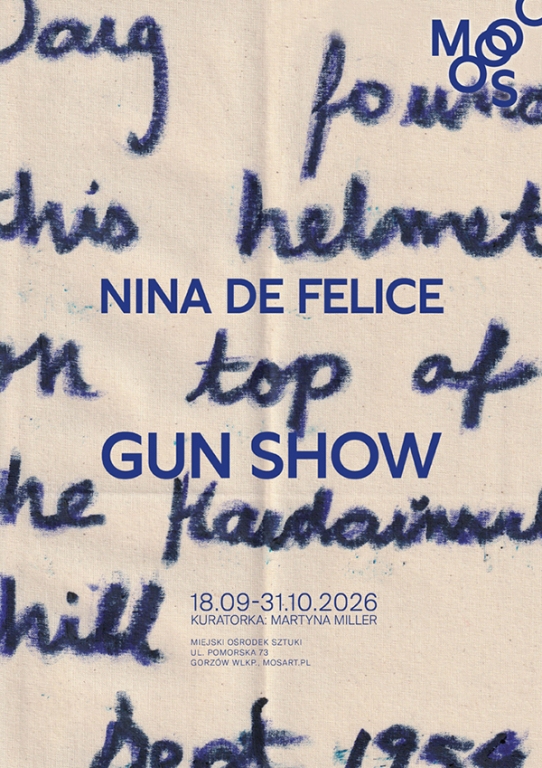
For this reason, the exhibition also takes the form of an archive. On the backs of the canvases, the artist reconstructs handwritten notes by the women in her family. It was they who, caring for memory and family bonds, recorded the context of the individual photographs. De Felice returns to these writings, enlarges them, and places them under protection, transferring them from the private circulation of memory into the exhibition space. The archive is therefore not merely a document of the past, but a living structure of relationships – it shows us a way of remembering others and our-selves.
In this dimension, GUN SHOW also becomes a story of nostalgia – of a time gone by and a place geographically distant, yet still present in memory. America is simultaneously a home and a country the artist consciously left; a source of closeness and unease, love and violence. The exhibition creates an intense, critical dialogue between the private and the public. It is an assemblage of politics, images, family histories, and cultural myths that permeate one another, inadvertently infecting and weaving our biographies together.
Alongside the paintings, the exhibition presents video work and an object – a cartridge enlarged to gigantic proportions, constructed from a collection of toy guns gathered by the artist. The object embodies one of the project’s fundamental tensions: the boundary between play and violence, fantasy and reality, childhood innocence and a culture in which guns are an omnipresent element of the imagination.
GUN SHOW is therefore as much a story about violence as it is about immense love. About rebel-lion in the name of one’s own well-being, and at the same time about accepting what – however uncomfortable – remains a part of us.
Martyna Miller
Nina De Felice
is an American painter and installation artist. She earned her BFA at the Corcoran School of the Arts and Design at George Washington University in 2012 and was the recipient of the 2012 Ethel Lorraine Bernstein Memorial Scholarship. After completing her studies, she moved to Berlin, Germany, where she continues to live and work, exhibiting throughout Europe and collaborating with artists in Berlin.
Her work focuses on themes of nostalgia and cultural influences. Currently, she is creating work under the title Gun Show examining American gun culture as a cultural export and its effects on language, gestures, behaviour, imagery and everyday habits. Simultaneously, she is working on a series titled In My Belly, which began as an experiment to paint all the vessels in her apartment and, after becoming a mother and becoming a form of a vessel herself, now navigates the emotions withheld between parents and children.


/fb_png.png)


DKF Megaron


dkf logo

2

PISF

Polskie Kina Cyfrowe

Europa Cinemas
/karta_png(1).png)
.png)

.png)


.png)
.png)
